
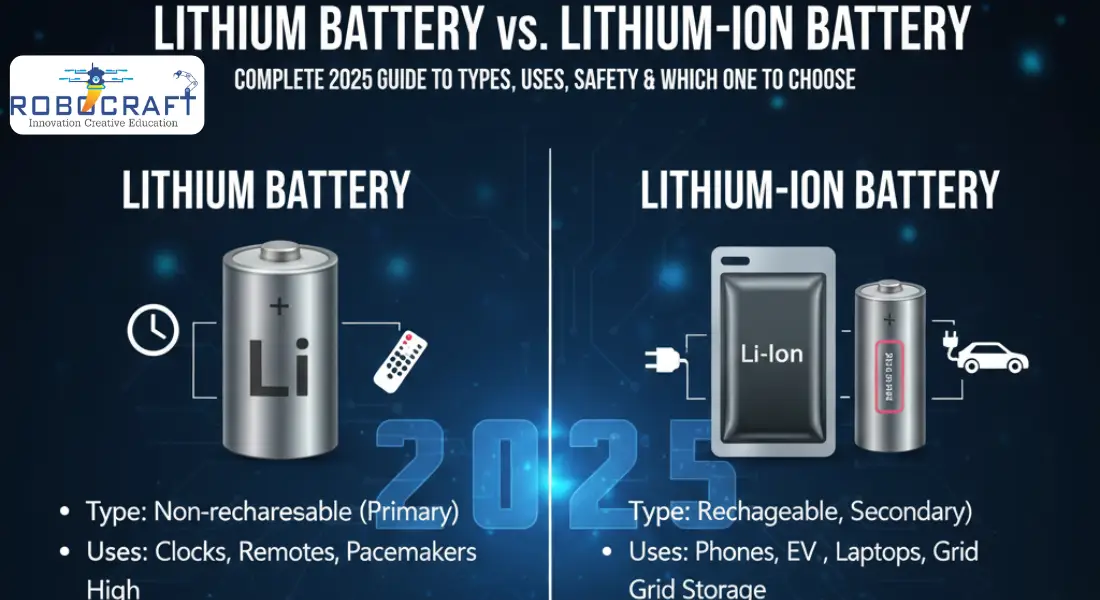
The pursuit for ways to efficiently and reliably store energy continues to accelerate into 2025, fuelled by developments in electric vehicles, renewable energy, and portable electronics. Lithium-based batteries lie at the centre of this evolution. However, there is a lot of confusion surrounding the differences between lithium batteries and lithium-ion batteries, as many people do not realize that these are two distinct types of batteries and they mistakenly use the word “lithium” for both. This complete guide will clarify these differences, discuss different categories of lithium batteries, including where and how to use them safely, as well as assist you with determining which battery is appropriate for your needs. If you want to upgrade your device(s) or invest in more sustainability, understanding lithium battery types is critical to making an informed choice.
Lithium Battery and Lithium-Ion Battery – What Are The Basics?
Before jumping into details, let me clarify the most important difference between the two types:
Lithium batteries are classified as primary ion batteries are classified as secondary. A lithium battery consists of lithium metal and some other materials that provide power to the device it is powering. A lithium-ion battery’s primary advantage over a lithium battery is that during discharging/charging cycles, lithium ions move from the anodes to the cathodes. The fundamental difference between these two batteries affects virtually every aspect of their manufacture, including lifespan, waste, and environmental impact.
As we look ahead to 2025, the recent push for greener technologies has propelled battery technology into the forefront of rechargeable battery markets due to their efficient recycling capabilities. Lithium batteries, on the other hand, still fill some very specific applications where the end of life for the battery requires disposal rather than reuse or recycling. Both lithium-ion and lithium batteries share lithium’s light weight and high energy density, but the chemistry and various uses of the batteries vary greatly between the two.
Lithium battery types
Lithium batteries are available in many different types that have been designed to fulfil certain niches. These various types of lithium batteries include:
- Lithium-Manganese Dioxide (Li-MnO2), which are frequently used in cameras, watches and medical devices due to their long shelf life and stable voltage that are usually characteristic of low-drain devices.
- Lithium-Iron Disulphide (LiFeS2), which are commonly used in military applications and in high temperature environments, providing a much higher energy density than their counterparts and suitable for use in extreme environments.
- Lithium-Thinly Chloride (Li-SOCl2), providing high energy output, are typically found in remote sensor applications and GPS trackers and are most effective in extremely cold environments but require extra care when handling due to their reactivity.
These types of primary batteries are designed to be sealed to prevent leakage and provide a compact design. Research and development in 2025 will focus on developing safety features to minimise the risks associated with lithium-ion and lithium battery technologies, including developing improved seals designed to lower the risk of battery fires.
The Different Types of Lithium-Ion Batteries
Lithium-ion battery technology is continuously changing, with multiple chemistries being researched and developed. Here are a few of the most notable types of lithium-ion batteries:
- Lithium Cobalt Oxide (LiCoO2): The first type of battery. They are commonly used in laptops and smart phones. They have a high energy density but are sensitive to thermal runaway.
- Lithium Manganese Oxide (LiMn2O4): Commonly found in power tools, lawn mowers, and electric bicycles. LiMn2O4 batteries are less expensive than LiCoO2 batteries and have a higher level of safety.
- Lithium Iron Phosphate (LiFePO4): Many consider this type of battery the most popular because it has a long cycle life and is extremely safe. However, they are not as energy-intensive as other lithium battery chemistries and are very durable.
- Lithium Nickel Manganese Cobalt (NMC) batteries: These hybrids are used in Tesla vehicles. They provide stability while also providing high energy density.
- Solid-State Lithium-Ion: Expected to be introduced to the market in 2025, solid-state lithium-ion batteries will use solid electrolytes instead of liquid electrolytes. As a result, they will likely be more effective and faster to charge. Companies like Toyota are leading the way in this area for automotive applications.
In addition to improved safety and faster charging times created by solid-state lithium batteries, they will also use graphene-enhanced electrodes for improved conductivity and longer lifespan from using AI-optimized battery management systems.
Which Applications Are Best Suited for Each Type of Battery?
Although choosing between lithium or lithium-ion batteries is typically a preference based on your intended application, disposable batteries are generally the best option for long-duration applications
Compact and reliable, even for small items like remote controls, calculators, and hearing aids, lithium batteries can provide a reliable power source.
This article discusses how lithium-ion batteries are used in modern applications like:
Medical devices Pacemakers and drug delivery systems rely on lithium-ion batteries for their stable performance.
Industrial sensor applications Industrial sensor applications can benefit from years of maintenance-free operation using lithium-ion batteries for remote monitoring.
Portability As they can be recharged, lithium-ion batteries power portable products such as smartphones, tablets, and wireless earbud headphones on the go due to their high energy density that allows for long-lasting operation.
Electric vehicles (EV) Electric vehicles, including Tesla and other emerging brands, use lithium-ion batteries in order to allow for long-distance travel and speedy recharge.
Renewable energy systems Solar panels and wind turbines use lithium-ion batteries for storage and grid stability.
Wearable technology Smartwatches, fitness trackers, and connected devices utilize lithium-ion batteries due to their lightweight design.
Takeaways for the Future As technology continues to evolve, it’s expected that we will find ourselves needing lithium-ion batteries for other future applications like advanced robotics and aerospace by the year 2025. Other technologies such as lithium batteries may be used for applications such as space probes, where it is impossible to recharge the batteries.
Safety Considerations Safety must always be a top concern, particularly in regard to the use of lithium-ion batteries, as lithium is a highly reactive metal that can create fire hazards if punctured or improperly disposed of. Because lithium batteries are stable under normal circumstances but will combust when subjected to flame and extremely high temperatures, users should always keep lithium batteries stored away from metal objects, and should follow any and all local disposal guidelines when disposing of lithium batteries, to avoid endangering the environment.
Lithium-ion batteries are being criticized because of incidents like smartphones that exploded when being charged. One of the dangers associated with lithium-ion battery technology is “thermal runaway.” In other words, when a battery overheats, it can catch fire. Fortunately, many of today’s lithium-ion batteries have safety features such as thermal fuses and Battery Management Systems (BMS) built into their designs. In 2025, when these batteries will be subject to regulations such as UL certification, product safety will improve even further due to the introduction of solid-state varieties, which include many safety benefits.
Best Practices for Using Both Lithium and Lithium-Ion Batteries
Do not overcharge either type, and avoid exposing your lithium- or lithium-ion battery to high temperatures.
- Always use a certified charger and store your battery in a cool, dry location.
- Dispose of your battery through a recycling program to help reduce the environmental impact of battery waste.
- Monitor lithium-ion batteries for swelling, and replace lithium-ion batteries as they age.
As the world continues to establish standardized safety regulations, the year 2025 will see the addition of innovations to prevent failure through the use of self-healing electrolytes.
What Kind of Battery Should You Choose?
To make an informed decision about whether to use a lithium battery or battery, you must ask yourself the following questions:
- Reusability: Lithium-ion batteries can be recharged, while lithium batteries can only be used once.
- Energy Density and Lifespan: Lithium-ion batteries have greater energy density and can be recharged for thousands of cycles compared to lithium batteries, which produce a steady amount of power for many years without needing to be recharged.
- Cost: Lithium batteries are cheaper initially but have a one-time-use limitation. Lithium-ion batteries typically have a higher initial cost but are less costly in the long run due to their ability to be reused many times.
- Application: If you are using a battery for an electric vehicle, or daily electronic devices, you will want a battery. However, if you are using a lithium battery for remote sensors, you should select a lithium battery.
The evolution of lithium-ion battery technology will change significantly beginning in the year 2025.
Many new technological advances and increased demand for sustainable methods of lithium sourcing will help drive qualitative improvements within lithium-ion battery technology. There will be some niche markets for lithium batteries in areas (such as extreme cold) that lithium-ion batteries do not work well; therefore, lithium batteries may be used more in the area of deep-sea exploration.
Additionally, by the time we reach 2025, new technologies will have developed that use AI and other automated technologies to help increase the lifespan / reduce possible future failure rates of lithium-ion batteries by having battery manufactures add predictive maintenance capabilities to lithium-ion batteries. Consumers should watch their industry environments, including user and industry publications, to remain informed about new products or technologies entering the market during the next few years.
