
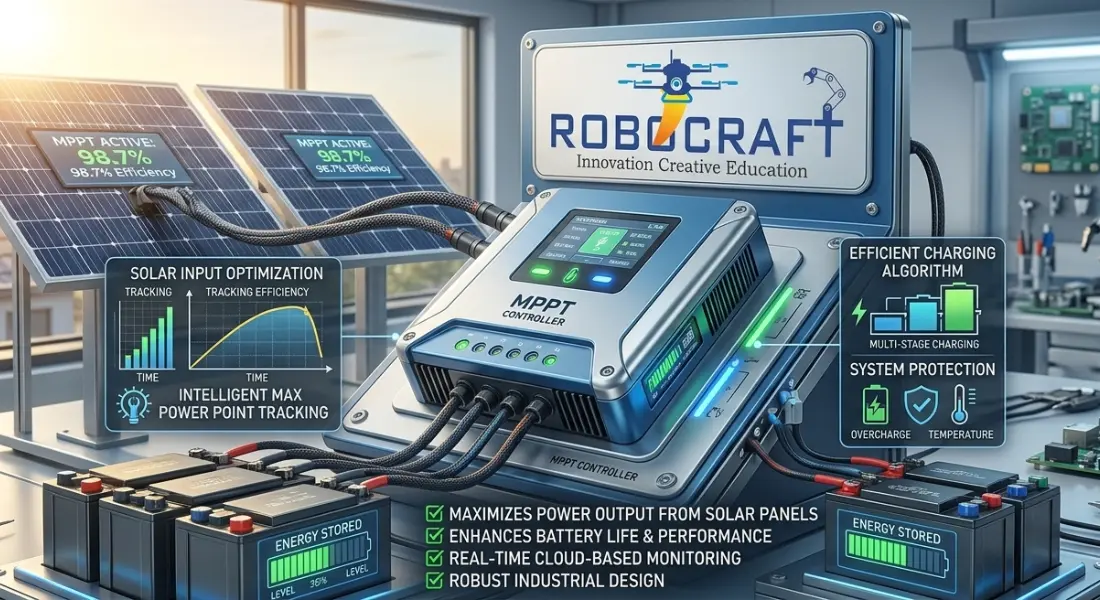
Sunlight offers great potential for clean electricity, yet making full use of it takes more than slabs on a roof plus storage cells. What really drives performance sits behind the scenes – control over how juice moves through the circuit. A Smart MPPT Controller fills that role perfectly. Think of it like a guide steering each bit of sunshine toward practical output, wasting almost nothing along the way.
A gadget like this one? It really does matter – whether you tinker on weekends or design circuits for a living. While regular controllers run tasks fine, smarter ones using MPPT stretch every bit of power by adapting live to changing conditions. This piece walks through what goes on under the hood, explains the real-world gains, then shows ways to fit it smoothly into your current gear without extra hassle.
Smart MPPT Controller Basics?
The Smart MPPT Controller means Maximum Power Point Tracking. This kind of solar charger adjusts high panel voltage to match what batteries need. Instead of just linking panels straight to a battery like older PWM types do, it searches continuously. By watching both voltage and current, it locates the best performance level. While basic units switch connections on and off, this one fine-tunes energy flow. Its method pulls more power under changing sunlight conditions. Because it adapts quickly, less electricity goes unused. Efficiency rises especially when there’s a big gap between panel and battery voltages. So even in cooler weather or partial shade, results stay strong. The system works smarter by responding to real-time shifts.
What makes it smart is how it links up and thinks ahead. Through built-in Bluetooth or Wi-Fi, these units let people check how they’re doing right away using a phone app. From there, live updates show power output, charge levels, and overall condition, putting energy choices firmly in your hands. Picking a Smart MPPT Controller means going with tech that adjusts itself instead of simply responding after the fact.
MPPT Technology in Solar Systems How It Works
What makes this tech useful becomes clear once you see how it works. Sunlight hits solar panels, making electric flow at set levels. Still, actual output shifts when light strength, heat, or shadows change. At every moment, the MPPT method checks the panel, hunting the peak point for maximum energy. That flash of peak performance? It grabs it instantly.
When that moment comes, extra voltage turns into more current through the controller’s work. Like shifting gears in a vehicle, it keeps performance smooth no matter the conditions. Instead of losing power, the system adapts – aligning panel output with what batteries actually need. On dull mornings or low sunlight angles, this match boosts harvest efficiency beyond basic setups.
Smart MPPT Controllers Key Features
Right off the bat, today’s controllers come loaded with tools meant to keep your system safe while making it easier to manage. Picking a Smart MPPT Controller? Pay attention to these key traits
Running strong, most models turn 95% to 98% of power into usable output, so waste stays low. Despite what some think, nearly all energy finds its purpose here.
From a distance, sensors send updates through built-in wireless links. Information flows even when you are far away. A quiet confidence grows knowing things stay under watch.
When it gets hot, the system lowers the charge voltage to avoid pushing too much power into the battery. Cold weather means a slower charge, so it boosts voltage just enough to keep things balanced. Heat changes how batteries take energy, and this tweak helps match those shifts. If temperatures drop, charging adapts instead of running full force. It reads the conditions, then fine-tunes each cycle without extra signals.
Not just one kind of battery works here – lithium pairs up cleanly alongside lead-acid types. Gel finds its place without hassle, while AGM slips right into operation. Each fits different setups, making shifts between power sources feel natural.
Not every model has it, yet certain ones power lights or pumps straight from the unit itself through integrated circuits. What stands out is how those versions manage output without extra parts nearby. Usually hidden inside, these connections handle demand quietly behind the scenes. From switch to device, energy moves only when needed, nothing more. Hidden pathways within turn on gear just by sensing timing or signals arriving.
Better Energy Harvest with Smart Solar Charging
Most folks notice better performance right away after switching to a Smart MPPT Controller. Efficiency takes a big leap – often between 20% and 30% higher than old PWM types. Because of this boost, getting the same output might need less solar panels. Fewer panels usually leads to lower setup expenses. That kind of saving adds up fast.
Built-in smarts inside these gadgets help batteries last longer. Because it stops too much charging or draining, the system keeps your power storage strong over time. Live updates let you catch problems fast – maybe a darkened solar panel or weak cell – so fixes happen before trouble grows. In the end, getting more usable energy and less damage to gear means the Smart MPPT Controller covers its cost naturally.
using solar power systems
A single MPPT setup can handle many different tasks. From small cabins far away to big houses without grid access, one idea ties them together.
When homes run without power lines, they rely on sunlight captured by smart devices that stretch every ray into steady energy. Lights stay bright even when clouds roll in because these systems adjust on their own. Appliances keep humming thanks to careful balancing behind the scenes. Efficiency kicks in where infrastructure ends, making independence possible.
Out on the water or down a backroad, room runs short. Because of that, every ounce counts when charging off the grid. Solar setups with smart regulation pull extra juice from compact arrays. That means less bulk without losing output – perfect where floors slope and ceilings dip.
When sunlight hits solar gardens, tiny systems power lights or move water more reliably thanks to better performance. These compact arrangements keep running smoothly even when conditions aren’t perfect.
Out in the field, remote telecom towers usually run on sunlight. Keeping things running smoothly matters most. A Smart MPPT Controller gives crews clear insights, so fixes happen before problems grow.
Fuelled by both wind and grid energy, these systems let the controller balance incoming power without a hitch.
Choosing a Smart MPPT Controller
Picking the right unit keeps everything running safely. Start by adding up how many watts your solar panels make together, then check what voltage your batteries run at. A good match means it won’t fail under peak output from the sun.
Start by looking at how much voltage the device says it accepts. When solar panels connect one after another, the combined push of electricity builds up fast. The unit needs to take that pressure without failing. Since different storage cells charge in unique ways, pay attention to what kind you have. For lithium-based units, the machine must follow a precise pattern to keep things running safely. A solid backup plan comes from picking a name that stands behind its product. When it works right every day, you know you made the right choice – especially with something like an ASmart MPPT Controller meant to last.
Installation and safety tips
Most mistakes happen when details get ignored during setup. The wiring guide from the maker should be your main reference at every step. After securing the battery connections, move on to linking the solar array. Doing it in that order keeps sudden power surges away from sensitive parts.
Thick wires help reduce power loss across long runs. From battery to controller, bigger conductors handle heavy loads without overheating. Protection devices like fuses belong near both the solar array and the stored energy source. Circuit breakers stop sudden surges before damage occurs. When in doubt, get someone trained to check the setup. Working safely matters most around strong direct current flows.
Conclusion
When it comes to clean power, how well things work really matters. What sets apart top results? An Smarter MPPT Controller does. It grabs more sunlight energy by fine-tuning voltage shifts on its own. Picture steady output even when skies turn patchy – this tech adapts fast. Running a cabin far from wires? Or boosting what you already have? This part shapes outcomes. Performance gaps often come down to one hidden component doing quiet heavy lifting. Small change in gear choice. Big ripple across daily yield. Precision here means less waste, round the clock. Not flashy. Just effective. Always working behind the scenes. Right pick pulls unseen weight in long-term reliability.
One wrong move could waste what the sun gives freely. When smart design meets daily light, results shift quietly but surely. Look around now – what exists might already fit your roof, your rhythm. Moving forward changes how you rely on distant grids.
