
Now imagine cutting ties with blackouts. Solar curiosity is growing across India, thanks to climbing power costs and unreliable supply. Homeowners start thinking differently when the lights flicker too often. Big installations still matter, yet backyards now host panels just as often. Personal projects pop up where you least expect them. Energy independence feels closer than ever before.
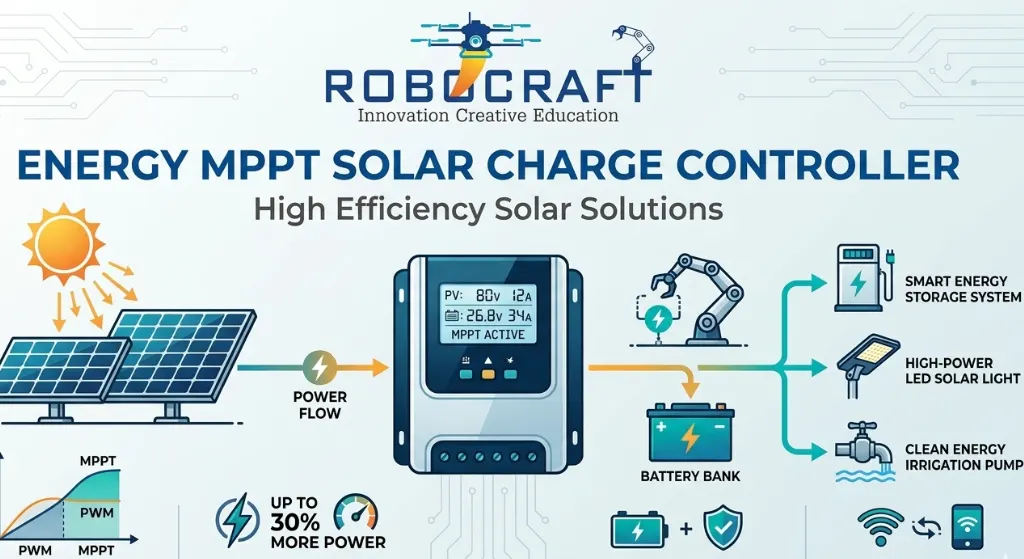
Here comes the energy MPPT solar charge controller. A clever gadget that changes how much power you get from sunlight. Basic models just manage flow, but this one tracks peak performance constantly. It pulls extra juice out of each panel – sometimes nearly a third more than old-style versions do. Even if you are new to solar setups – or deep into custom builds – it keeps batteries charged without hassle. Found across Indian households and local shops alike, it handles real-world conditions well.
Energy MPPT solar charge controller basics?
A single spark of sunlight hits the panel – yet most energy slips away if nothing guides it. Think of an energy MPPT solar charge controller as the quiet hand adjusting the tap, letting just enough through. It steps in where chaos begins, turning wild current into steady pulses. Without it, batteries take too much, then break down sooner. This piece keeps rhythm between sky-powered input and what storage can handle.
Imagine something that guides sunlight energy just right. This piece links panels straight to storage units, adjusting flow to squeeze out every bit of juice. New to this? Swap a slow ride for one that hums along, sharper, smoother, stronger.
How It Works For Beginners
Here’s the thing – no advanced degree needed. A solar charge controller with MPPT tech keeps checking your panels, hunting for that perfect balance of voltage and current where they work hardest. That moment? It’s known as locking onto the most efficient power level.
Faster charging happens because leftover voltage turns into added current, pushing more energy into the batteries. When skies turn gray or trees cast shade – regular there – it keeps working while basic models cut off. Full batteries don’t stop it. Sunlight gets used, not tossed.
MPPT Boosts Solar Panel Performance
Right where sunlight meets circuitry, an energy MPPT solar charge controller uses smart tracking. Not when things are perfect – but when clouds drift or shadows creep – does it matter most. Panels hit peak output at one precise moment, yet temperature swings or tilt shifts move that spot. Instead of guessing, the system senses, reacts, follows. Each flicker of change prompts tiny recalculations inside. What looks still is always shifting beneath.
MPPT versus PWM quick comparison
Starts off slow – PWM cuts costs but drops performance Think cloudy days or short winter light: still strong output when others fade. Even under heavy sun or pouring rain in India, one unit pulls ahead without extra gear.
Key Features and Benefits
What makes an energy MPPT solar charge controller stand out? Packed with advantages, it simplifies how you manage power from the sun. Still, ease comes through smarter charging, not just claims.
Efficiency up to ninety eight percent
Start capturing almost every bit of energy your solar setup generates. Stop seeing bright days wasted without benefit.
Smart Charging
A fresh charge begins when sunlight hits the panels, moving energy in waves. Power flows steadily at first, filling the cells like rain fills a barrel. Once nearly full, the flow slows, careful not to spill. This gentle finish keeps chemistry balanced inside. Over time, that care adds up – wear fades, lifespan grows.
Battery Protection
Should power run too high, protections kick in automatically. When levels drop too low, systems respond without delay. Hooked up backward? The design handles that too. Safety stays active throughout each stage.
Longer Lifespan
A single solid MPPT system might run strong past ten full turns of the calendar, where others start failing. Out ahead of older PWM models, it stays steady long after they’d need swapping. Over time, that stretch means fewer trips to buy new gear.
With these tools in place, clean power becomes something most people can reach. Easy access shows up where it matters most – home by home, step by step.
Applications and Use Cases
A solar charge controller using energy MPPT technology works just right for daily life across India.
Home Solar Systems
When the grid goes down, keep lights on, fans spinning. Works just as well in city units as it does out past town where roads turn to gravel. A blackout doesn’t mean going dark if you’ve got power stored and ready.
Off-Grid Setups
Out there where sun comes and goes? MPPT keeps power steady. A cabin tucked far away gets reliable output regardless of shifting light.
Small Businesses
Fridges hum steadily at shops, while clinics power equipment – all untethered from distant grids. Farms keep things cold too, their machines running free of city lines.
DIY Solar Projects
Folks who tinker adore this setup – it works well alongside solar panels ranging from 100 to 500 watts, perfect for on-the-go charging or life on wheels. While some plug it into compact energy storage units, others rely on it during road trips where steady juice matters most.
High Efficiency Solar Solutions?
When sunshine comes and goes across India, one thing stays clear: the energy MPPT solar charge controller works better than most. Since it uses power more wisely, fewer panels are needed to get the job done. Buying less hardware at first cuts cost, which feels good right away. Over time, smaller electricity payments add up, making the switch pay off without drama.
Out in the open, these handle extremes just fine – blistering sun in Rajasthan or heavy downpours in Kerala. Since they soak up sunlight more effectively, there is less need for extra battery storage over time. Taking this route quietly lowers ongoing costs. This move fits well into a life that thinks ahead about resources.
Selecting an MPPT Controller
Picking the perfectenergy MPPT solar charge controller? Here’s my expert advice:
Build Quality
A solid build matters – pick gear rated IP65 to handle rain or dust. Bargain models often fall apart within months, skip those.
Out in the open, see how it performs – then check what people across India say about staying power. Real-world use tells more than specs ever could, especially when voices from different cities back it up.
Conclusion
One more thing stands clear – the MPPT solar charge controller opens up what solar energy can really do. Not just lifting how well panels work, but also bringing solid safety features along with a longer life span. This piece sits right at the center when building smarter solar systems. Whether new to solar, tinkering on projects, or running compact units anywhere in India, sunlight shifts into lower bills and self-reliance.
