
Choosing a lithium battery charger for e-bikes electric vehicles and home energy setups
Fueled by progress in clean transport and stored energy, lithium cells now run e-bikes, cars without gas, and backup units at home. Yet every strong tool brings risk – poor charging choices might shorten lifespan, spark danger, or kill the pack fast. Picking the correct match matters more than most think. Riders who love trails, people moving each day across town, homeowners adding sun panels all face similar needs. Details count when it comes to feeding these batteries what they need. Looking closely at how well things work together, how safe they are, how much energy they use these matter more than most realize. One thing stands out: picking better chargers for lithium batteries means fewer headaches later on.
Lithium Batteries Require Specific Charging Equipment
Most e-bikes, electric cars, and household power systems run on lithium-ion cells – these are nothing like the old lead-acid kind. Charging them wrong leads to trouble: too much heat, even fire. Regular chargers fail here because they ignore how lithium reacts under load. The right charger matches that chemistry exactly. Take an e-bike battery charged poorly it might die in weeks instead of lasting years. Just like that, electric vehicles need powerful chargers able to deliver speed while keeping the battery healthy. On another note, household power setups – especially ones paired with solar – depend on charging units that work smoothly alongside inverters and connect reliably to the electrical grid.
Start by picking a lithium battery charger that fits what your device needs. That way it runs well and stays safe. Skip this step, expect extra bills and problems down the line. Think about how different chargers work one type might charge various batteries but another only handles one kind right.
What to Know Before Picking a Lithium Battery Charger
Picking a charger means going beyond what sits on display. What really matters comes down to checking key details, so the unit fits how you plan to use it.
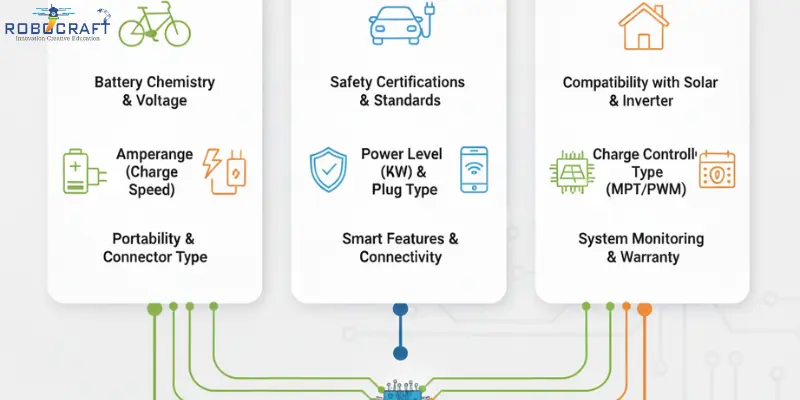
1. Voltage and Current Compatibility
Start by looking at how much power the battery needs. E-bike cells usually run between 36 volts and 48 volts, whereas electric cars may need over 400. Houses storing energy tend to use 12 or 24 volt designs. The charging unit has to fit that number just right – a wrong match might ruin the pack. Try finding models with switches for different levels, or ones marked clearly for certain outputs. A single e-bike battery might need just two amps, maybe five – depends on the model. Check what the manual says before you plug anything in.
2. Charging Speed and Efficiency
Charging things quickly fits better when life moves nonstop. A good charger brings an e-bike battery back to full between two and four hours. Some car chargers cut that time down – half an hour up to several, based on what you drive. What really counts is not just speed but how well it uses power. Pick one that runs above ninety percent efficiency so less juice goes to waste. When setting up at home, pick a smart charger that works alongside solar power instead of depending only on utility electricity. A lithium battery charging unit with scheduled times or automatic stop settings keeps batteries from getting too full, which helps them last longer.
3. Safety Features
Staying safe matters above all else. Mishandling lithium batteries can lead to sudden heat build-up, which makes it critical to pick chargers that include several layers of defines – protection against too much charge, resistance to electrical shorts, constant watch on heat levels, along with guards for incorrect plug-ins. When powering electric vehicles or household setups, go for units tested under UL certification or stamped with CE marks; these follow global rules for secure operation. On e-bikes, compact chargers showing status through lights help spot trouble such as excess warmth before it grows. Owning a solid charger built for every kind of lithium cell brings calm, particularly during night-time top-ups or when far from city power sources.
4. Portability and Design
When it comes to how you use it, being able to carry things around easily might matter most. If you ride an e-bike, something small and light that slips into a bag works well when traveling. People with electric cars may lean toward units fixed on walls or built right into the car. Those running home power setups usually look for pieces that fit neatly, sometimes with covers that handle rain if placed outside. Picture how it looks. Are the numbers clear? Maybe you need more than one plug working at once. Some let you check status from a phone. This kind of charger changes as your day’s change.
5. Brand Reputation and Warranty
Some companies earn trust easier than others. Look into makers such as Bosch, Shimano, or Tesla when checking e-bikes and electric vehicles, Enphase if it’s about home setups. Customer feedback found on Amazon or niche discussion boards reveals how things work out there in daily use. When a brand offers solid coverage – often between one and three years – it usually means they stand behind what they build. Spending a bit more now can mean fewer headaches later. Look at companies that actually know their way around lithium systems when picking a full charge battery charger.
Types of Lithium Battery Chargers by Use
Folks often think chargers work everywhere – truth is, they do not. For e-bikes, what works rides on portability plus charge speed. Electric vehicles? They demand higher power, longer sessions. Home setups need steady output, smart timing. Each setup fits its own rhythm.
Chargers for E-Bikes
Small e-bike batteries usually mean tiny chargers too. Charging gets smarter when stages shift gently – trickle mode helps keep power cells strong. Brands like Bosch or Panasonic stand out because they charge faster while protecting the system inside. Long trips? Try a lithium charger with a plug that fits many kinds of bikes. Cost changes based on extras, anywhere near fifty bucks up to one hundred fifty.
Electric Vehicle Chargers
Charging an electric car isn’t just plug and go. You’ve got options: slow charge from a regular wall socket, faster with a 240-volt setup, or rapid boost using DC stations. At home, devices such as the Tesla Wall Connector or Juice Box make life easier – they run on strong power, even up to 80 amps, while linking into your household tech network. When you’re out driving long distances, public quick chargers come in handy. Yet day after day, it might be smarter to pick a lithium battery system that charges fully – and sends energy back when the lights go off.
Home Energy System Chargers
Starting at the basics, home systems using lithium battery banks need a charger compatible with inverters and MPPT controllers. Take Victron or Outback – they build durable units that come with tracking tools. These help store energy from sunlight or mains power without waste. Sometimes, one of these chargers will cut non-essential loads if voltage spikes. Living away from utility lines? That kind of setup supports self-reliance well.
Common mistakes to avoid and pro tips
Most mistakes with chargers happen even though they’re easy to prevent. Picking one just because it costs less can backfire since low prices usually mean missing protections. Going for a no-name charger instead of a compatible brand match risks poor contact with the battery’s internal controls. Charging outside the 20-25°C range? That sets stress into lithium cells fast.
Check the charger now and then for signs of damage. A smart lithium battery charger that gets software fixes works better over time. If more gadgets show up at home, pick a setup you can add to later. Knowing how batteries like to be treated helps them last – keep them around half full, never let them drain completely.
Final Thoughts on Choosing Wisely
Your choice of lithium battery charger affects more than how well it works – it touches safety and long-term use. When you pick one, think about whether it matches your device, stays safe under load, runs without waste. That kind of care stretches life across e-bikes, electric cars, even backup power at home. A charger built for your exact setup brings steady performance, fewer expenses down the road. Look into what you actually need, check real user feedback, talk to someone knowledgeable when unsure. Fueled by a solid charger, life stays charged longer. Step into trusted stores if it feels like time – smarter power waits just ahead.
What to Think About When Picking a Lithium Battery Charger
Picking a charger means looking past what sits on display. What matters most comes down to how well it fits what you actually need, especially when power sources rely on steady performance. Each detail counts, yet only some will match your situation directly.
1. Voltage and Current Compatibility
Start by looking at the numbers on your battery. E-bike power packs usually sit between 36 volts and 48 volts. Electric vehicles? They climb much higher – sometimes past 400 volts. House-based storage units tend to run on either 12 or 27 volts instead. The plug-in device needs to fit that number precisely; wrong matches risk harm. Pick models offering changeable options or ones clearly marked for certain outputs. A good rule? A 48-volt e-bike charger works best at roughly two to five amps. Check the battery guide – every time – to be sure.
2. Charging Speed and Efficiency
Few things beat a quick charge when time is tight. Getting back on the road fast means picking a charger that fills an e-bike battery within two to four hours, whereas electric vehicles may need just half an hour or stretch into several, based on what you drive. Still, rushing isn’t worth wasting power. Models hitting more than 90% efficiency keep losses low, which makes sense if every watt counts. Home setups might work better with smart chargers tied to solar power, cutting down grid dependence. When lithium batteries charge, a timer inside the unit – or automatic shutoff – keeps them from overfilling, which helps them last longer.
3. Safety Features
Always put safety first. Mishandling lithium batteries can lead to sudden heat buildup, making it critical to pick chargers that guard against overcharging, block short circuits, watch internal temperatures, plus stop incorrect plug-ins. Devices used in electric vehicles or household setups should carry UL or CE marks, proving they follow global rules. When riding e-bikes, compact units showing light signals help spot rising heat early. Owning a solid charger built for every kind of lithium cell brings calm during night charges or off-grid use.
4. Portability and Design
When it comes to your specific needs, how easily you can carry a charger may matter most. If you ride an e-bike, something small and light that slips into a bag works well while traveling. People with electric vehicles usually go for units fixed to a wall or built into the car itself. Those using home power systems typically want charging gear that matches their layout – sometimes even sealed against rain if placed outside. Start by looking at how it’s built – clear screens help you see what’s happening without guesswork. Using more than one device at once? Check if several plug spots are included. Want updates from afar? Some link to software that shows status even when you’re away. One solid option keeps up with different ways you power things each day.
5. Brand Reputation and Warranty
Some companies earn your trust easier than others. Look into makers such as Bosch, Shimano, or Tesla when checking e-bikes and electric vehicles, Enphase if you’re focused on home energy setups. Customer feedback found on Amazon or niche discussion boards helps show how things hold up over time. Confidence in a product often shows through a solid guarantee, usually lasting one to three years. Look past bargain imitations – savings now can mean expensive fixes later. For a full charging lithium battery charger, choose companies known for real results in lithium systems.
Types of lithium battery chargers by use
Not every charger works for everything. This guide covers what fits e-bikes, electric cars, and power at home.
Chargers for E-Bikes
Small e-bike batteries usually come with slim chargers. A good one gives stages of power, ending with a slow feed to keep cells strong. Brands like Bosch or Panasonic offer quick top-ups plus safety inside. Long-distance riders might prefer a lithium charger that fits many bikes using any plug type. Cost changes by function – between fifty and one hundred fifty dollars.
Electric Vehicle Chargers
Starting off, electric vehicle charging isn’t just one-size-fits-all – it splits into types such as basic household outlets, upgraded 240-volt setups, and rapid DC stations. At home, something like the Tesla Wall Connector or a Juice Box works well because it runs faster while staying reliable. They’re built to manage heavy electrical flow, even near 80 amps, plus they link up with modern home networks. When you’re on the move, public quick chargers save time; yet day after day, consider getting a lithium battery system that charges fully and sends energy back – to keep lights on if power goes down.
Home Energy System Chargers
Charging gear matters when you run a home system using lithium batteries to store solar power. Devices must play well with inverters, plus hook up cleanly to MPPT controllers. Companies such as Victron or Outback build tough units – many come bundled with apps that track performance. That way, juice flows smoothly into the cells whether it’s coming from sunlight or wall outlets. Some models even cut non-critical loads if demand spikes too hard. Living far from utility lines? This kind of setup keeps things steady.
Common Errors to Skip and Practical Tips
Some folks pick chargers without thinking ahead. Go for quality, because low cost usually means missing safeguards. Using off-brand chargers with name brand batteries can cause mismatched signals to the BMS. Charging outside normal conditions is risky – lithium works best around room temperature.
Check the charger often for signs of damage. A lithium battery unit that gets regular software upgrades works better over time. If more than one person charges devices at home, pick a setup you can add onto later. Knowing how batteries respond helps – they last longer when kept around half full instead of running them down completely.
