
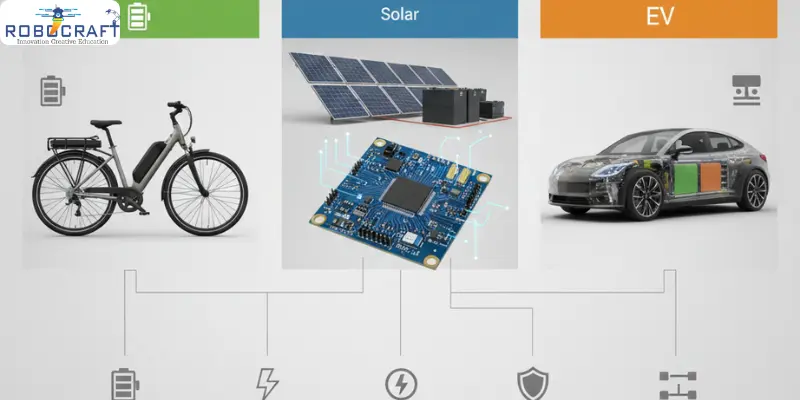
A BMS (Battery Management System) is the small circuit board that keeps a lithium battery pack safe. It watches every cell, stops the pack from being over-charged or over-drained, cuts power during a short circuit and keeps the cells balanced. Pick the wrong BMS and your scooter may cut out under load, or your cells may age much faster than they should.
This guide explains what a BMS does and how to choose the right one for e-bike, EV scooter, solar and other lithium battery packs.
1S–20S
Series options in stock
NMC & LFP
Chemistries
4A–50A
Continuous current
Balancing
Cell protection
What does a lithium battery BMS do?
- Over-charge protection: stops charging when any cell reaches its maximum voltage.
- Over-discharge protection: cuts the load before any cell drops too low, which would damage it.
- Over-current and short-circuit protection: disconnects the pack if current goes above the safe limit.
- Temperature protection: uses temperature sensors (NTC) to stop charging or discharging when the pack is too hot or too cold.
- Cell balancing: keeps all cells at a similar voltage so the pack delivers its full capacity.
- Monitoring (smart BMS): shows voltage, current, temperature and state of charge through Bluetooth, UART or CAN.
How to choose the right BMS: 6 checks
1. Series count (S) must match the pack
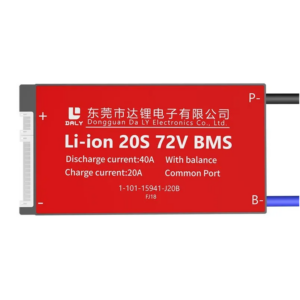
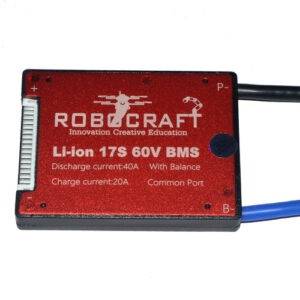
The BMS must be made for the same number of cells in series as your pack. A 48V lithium-ion scooter pack is usually 13S, a 60V pack 16S and a 72V pack 20S. A 51.2V LiFePO4 pack is 16S and a 12.8V LiFePO4 pack is 4S. A 13S BMS cannot protect a 16S pack.
2. Chemistry must match
Lithium-ion (NMC) and LiFePO4 cells have different safe voltage limits, so their BMS boards are different. Use a lithium-ion BMS for NMC packs and a LiFePO4 (lithium phosphate) BMS for LFP packs.
| Cell chemistry | Nominal per cell | Typical over-charge cut-off | Typical over-discharge cut-off |
|---|---|---|---|
| Lithium-ion (NMC) | 3.6–3.7V | around 4.2–4.25V | around 2.7–3.0V |
| LiFePO4 (LFP) | 3.2V | around 3.65–3.75V | around 2.5V |
Exact limits vary by BMS model; always check the datasheet.
3. Continuous discharge current
The BMS continuous current rating must be higher than the maximum current your motor controller or load draws. Add a margin of about 20–30% so the BMS does not trip during acceleration or hill climbing.
4. Charge current
Check the maximum charge current the BMS allows and make sure your charger stays within it. Our lithium charger guide explains how to match charger voltage and current.
5. Common port or separate port
A common-port BMS uses the same wires for charging and discharging, which keeps wiring simple. A separate-port BMS has different paths for charge and discharge, often with a lower charge-current limit. Follow the wiring diagram for your board.
6. Balancing and smart features
Most BMS boards use passive balancing, which bleeds a little energy from higher cells. Smart BMS models add an app or data port so you can see each cell’s voltage, which is very useful for EV, solar and ESS packs.
Example: choosing a BMS for a 48V scooter pack
Pack: 48V lithium-ion, 13S. Motor controller: up to 35A. Choose a 13S lithium-ion BMS rated for at least 40–45A continuous, with temperature sensing. If you want to monitor cell health, choose a smart BMS with Bluetooth.
BMS by application
| Application | Typical pack | What to look for in the BMS |
|---|---|---|
| E-bike / e-cycle | 24V–36V lithium-ion | Correct S count, 15–30A continuous, compact size |
| EV scooter | 48V–72V lithium-ion or LiFePO4 | High continuous current, temperature sensors, ideally smart monitoring |
| Solar / inverter battery | 12.8V–51.2V LiFePO4 | LFP chemistry, good balancing, communication with the inverter if needed |
| Small devices and robotics | 1S–4S packs | Small board, correct cut-offs, current to match the load |
Common BMS mistakes to avoid
- Using a BMS with the wrong series count or chemistry.
- Choosing a BMS rated below the controller’s peak current, causing sudden cut-offs.
- Connecting balance wires in the wrong order. Always connect them exactly as shown in the BMS diagram.
- Skipping temperature sensors on high-current or enclosed packs.
- Charging through the discharge port on a separate-port BMS.
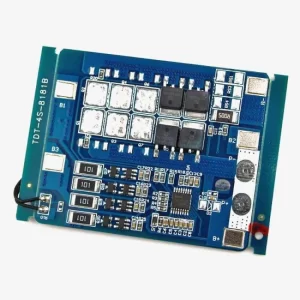
Popular BMS boards
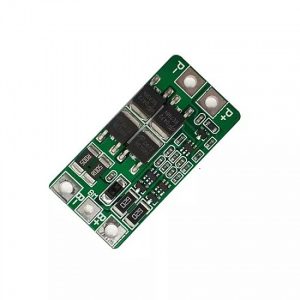
Frequently asked questions
Can I use a lithium-ion BMS on a LiFePO4 battery?
No. The voltage limits are different. A lithium-ion BMS would let LiFePO4 cells charge too high and would cut off at the wrong low voltage. Use a LiFePO4-specific BMS.
Why does my scooter cut off when I accelerate?
Often the BMS over-current protection is tripping because its rating is lower than what the controller draws, or a weak cell is dropping below the cut-off voltage under load.
What is a smart BMS?
A BMS with communication, usually Bluetooth, UART or CAN, so you can view cell voltages, current, temperature and state of charge, and sometimes adjust settings.
Does a BMS balance cells while riding?
Most passive-balancing BMS boards balance mainly near the end of charging. That is why fully charging the pack from time to time helps keep cells matched.
Do I need a BMS for a single-cell battery?
Yes, even a single lithium cell should have a protection circuit. Small 1S protection boards are made for exactly this.
Need help choosing a BMS?
Robocraft supplies lithium-ion and LiFePO4 BMS boards from 1S to 20S, plus custom BMS for battery packs. Share your cell type, series count and controller current and we will suggest the right BMS.
