
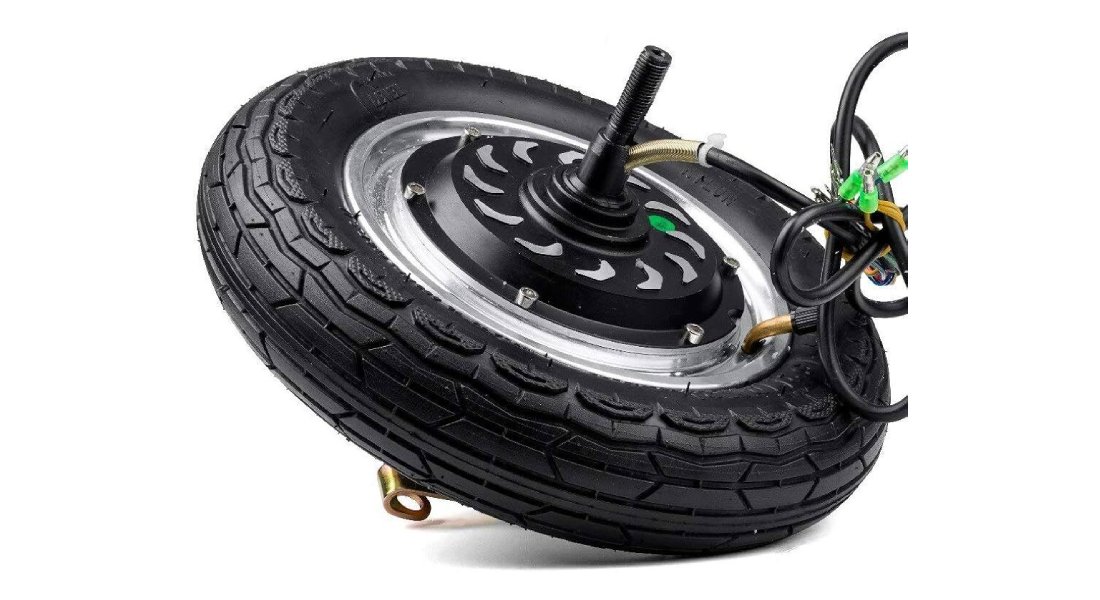
Most electric scooters, e-bikes and e-rickshaws in India use a hub motor – a brushless DC (BLDC) motor built directly into the wheel. It is simple, quiet and almost maintenance-free. This guide explains how hub motors work, the difference between geared and direct-drive types, how to read power and voltage ratings, and how to choose the right motor for your vehicle.
BLDC
Brushless design
250W–3kW
Power range
24V–72V
System voltages
Low
Maintenance
How a hub motor works
A hub motor places the stator (copper windings) on the fixed axle and the rotor (permanent magnets) in the rotating wheel shell. The controller switches current through the windings in sequence, using Hall sensors to know the rotor position, which spins the wheel directly – no chain, belt or gearbox needed.
Geared vs direct-drive hub motors
| Feature | Geared hub motor | Direct-drive hub motor |
|---|---|---|
| Construction | Small fast motor with internal planetary gears | Large motor, wheel driven directly |
| Torque at low speed | High – good for hills and loads | Moderate |
| Weight | Lighter | Heavier |
| Noise | Slight gear hum | Almost silent |
| Regenerative braking | Usually not (freewheel) | Possible |
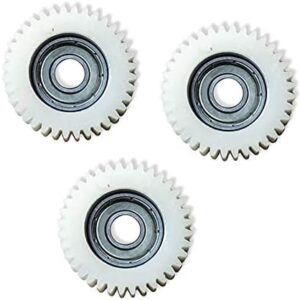
| Maintenance | Nylon gears may wear over time | Virtually none |
| Typical use | E-cycles, light e-bikes | Scooters, e-rickshaws, high-speed vehicles |
Hub motor vs mid-drive motor
A mid-drive motor sits near the pedals or centre of the vehicle and drives the wheel through a chain or belt. It climbs hills better and keeps weight central, but needs more maintenance. Hub motors are simpler and cheaper, which is why most scooters use them.
Choosing the right hub motor
| Vehicle | Typical voltage | Typical power |
|---|---|---|
| Electric cycle | 24V–36V | 250W–350W |
| E-bike / low-speed scooter | 48V | 250W–750W |
| City scooter | 48V–60V | 1000W–1500W |
| High-speed scooter | 60V–72V | 2000W–3000W+ |
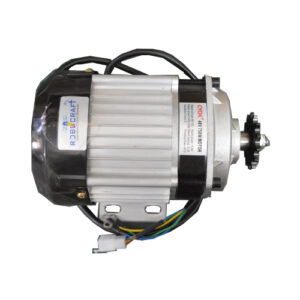
| E-rickshaw / loader | 48V–60V | 1000W–1500W (geared or rear axle motor) |
- Match voltage with your battery and controller.
- Choose power for your load, speed and hills – more watts for heavier riders and slopes.
- Check wheel size – 10″, 12″, 16″, 17″ and so on; smaller wheels give more torque, larger give more speed.
- Brake type – drum or disc mounting must suit your frame.
- Controller – rated for the motor’s voltage and peak current.
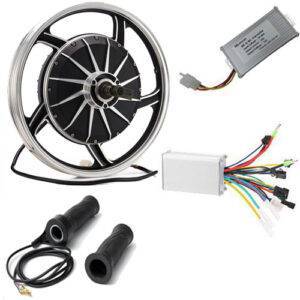
Hub motors and kits
Common hub motor problems
- Jerking or not starting – often a faulty Hall sensor or loose phase connector.
- Grinding noise – worn bearings or, in geared motors, worn gears.
- Overheating – overloading, steep climbs or an over-powered controller.
- Water entry – damaged seals or cable entry; dry and reseal promptly.
Frequently asked questions
Which is better: hub motor or mid-drive?
Hub motors are simpler, cheaper and low-maintenance; mid-drives climb better. For most city scooters a hub motor is the right choice.
Can I increase my scooter’s speed with a bigger hub motor?
Speed depends on motor rating, voltage and controller together. Upgrading needs a matching battery and controller.
How long does a hub motor last?
Direct-drive hub motors can last many years with only bearing replacement; geared motors may need gear service.
Do you supply conversion kits?
Yes – we supply hub motor kits and complete EV conversion kits. Also read about PMSM motors.
Find the right motor for your EV
Robocraft supplies hub motors, BLDC motors, controllers and complete EV conversion kits with pan-India delivery. Tell us your vehicle, load, speed and battery voltage and we will suggest the right motor.
