
Right now, energy freedom matters. Solar power fits into life quietly, without drama. Inside every solar system hides a Solar Battery it saves up electricity until you need it. When storms knock out lights, these batteries keep things running. Even far from towns, cabins stay powered because of them. Picking one isn’t just shopping. It shapes how well your place handles dark hours. Some store more, some last longer, others play nice with certain panels. This look at solar batteries covers what actually counts. Details matter most when the grid quits. Your needs aren’t someone else’s. Matching a battery to your days makes all the difference.
What a Solar Battery Is
A solar battery? It holds onto extra power made by panels while sunlight lasts. When night falls, clouds roll in, or the grid fails – that stored juice comes in handy. These aren’t ordinary batteries; they handle frequent draining and refilling much better. You’ll find them mainly as lithium-ion, lead-acid, or flow types – each works differently, brings different trade-offs. Picking a solid one means getting more from your panels. Less dependence on outside electricity follows naturally. Bills tend to shrink. So does environmental impact.
What to Think About When Picking a Solar Battery
Picking the top solar battery means looking at both tech details and real-world use. A closer look shows what really matters
- Storage Capacity and Energy Levels
The amount of energy a solar battery holds is shown in kilowatt-hours. Homes often get by with 10 to 20 kWh each day just fine. When power goes out for days, backup units must keep going without fail. Living completely off the grid? You could be looking at more than 50 kWh stored. Daily usage combined with how much sun your panels catch shapes what size fits best. Energy reviews give clear pictures of where every watt ends up. Some batteries let you add storage later if life changes down the road.
- Battery Type and Chemistry
A shift toward lithium-ion means better results on rooftops. Take NMC or LFP types – they pack more power into smaller spaces, handle thousands of charge rounds, refill quickly. These fit today’s living patterns well, just cost more upfront. Weightier lead-acid versions sit lower on efficiency charts yet deliver trust when prices matter most. Even if they’re not common, flow batteries handle big off-grid setups well because they last so long. Depending on how much room you have and what you can spend, lithium-ion might fit better since it takes up less space and works efficiently at home.
- Efficiency and Round Trip Efficiency
What matters most? How much sunlight turns into stored power? Pick one that keeps at least 9 out of 10 watts during charge and release. When the number climbs past ninety percent, less slips away. More saved energy means more lights stay on when the grid’s down. Team it up with a smart inverter so nothing goes to waste.
- Lifespan and Warranty
A solid solar battery typically runs between five and fifteen years, lifetime tied to how it’s used. Look into warranty details – many lithium-ion models back their performance for a full decade. Long-term reliability shifts with depth of discharge; units supporting 80 to 100 percent tend to deliver stronger returns over time.
- Compatibility and Integration
Start by checking that the solar battery matches up smoothly with your panels and power gear. Some units come with apps showing how much juice they hold and how well they’re working. Homeowners should pay attention to whether their system connects neatly to grid-friendly inverters. Off-the-grid spots demand a battery strong enough to handle everything alone.
Cost and Return on Investment
Starting around five thousand dollars, solar battery prices can climb to fifteen thousand. Over time, money saved might balance what you spend up front. Because they need less upkeep, lithium-ion types could save more, quicker. Tax breaks and similar perks help improve how much value you get back.
Safety and Environmental Impact
Start thinking about safety when choosing solar batteries – ones that resist overheating or getting too full charge work best. Go with greener choices if cutting down environmental harm matters to you.
Tailoring Solar Batteries for Specific Applications
Different setups require customized approaches when selecting a solar battery:
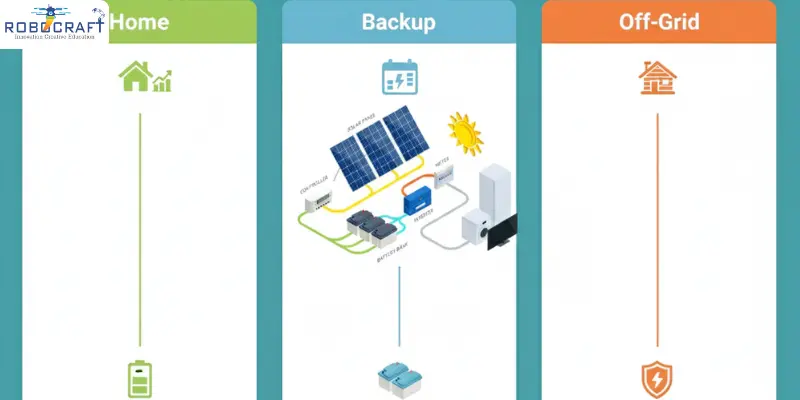
- For Home Systems
A small garage might hide it well. Some homes show off their storage near the meter box instead. Ten to fifteen kilowatt-hours hold enough juice when lights go out. Lithium cells keep things running without much noise. Smart circuits decide when to save or release power. One popular model tucks neatly against a basement wall. Another fits outside behind shrubs. Clean lines help it fade into modern spaces. Design matters just as much as what happens inside.
- For Backup Systems
When power cuts hit, backup solar batteries jump into action fast. Though lead-acid types handle brief blackouts fine, lithium-ion stores energy more quickly – key for fridges or health gear. Some setups mix both worlds using hybrid models. What helps later on? Being able to add units as needs grow. Designs that let you plug in extra modules make expansion smoother down the road.
- For Off-Grid Systems
A solid solar battery must keep going when off-grid life throws curveballs. Lithium-ion packs or flow types work well, especially if they run in cold weather far from cities. Brands such as Outback or Victron stand out by lasting longer on their own, even when there is no backup power nearby. What matters most? They just do not quit.
Choosing a Solar Battery What to Watch Out For
Mistakes happen, even when you mean well. Watch out for these
Too little power storage? That happens when the math doesn’t match actual demand. Getting it wrong means wasted sun energy or blackouts at night. Size matters because daily habits shape how much juice you really need. Skip guesses. Use numbers from real life instead.
Skipping upkeep can cause issues down the line. Pick models that need less attention over time.
Avoid skipping local rules. Each area has different permits, different rebates – check what applies where you are. What works there might not work here.
A low price tag often hides poor build, so swapping units becomes routine. What seems like savings at first turns into endless hassle down the line.
The Future of Solar Energy Storage
Faster progress in tech means solar batteries now work better and learn faster. Solid-state types could pack more power into less space, whereas smart software helps them stay in top shape. Homes using solar might see longer run times, fewer repairs, on simpler setups when living away from main power lines.
Picking a solar battery means lining up how much it holds, what kind it is, how well it works, and what it costs – match these to what you actually need. Focus on solid build and if it fits your setup; that way, power stays on, expenses go down, lights stay lit, and life feels lighter on the planet. Think of it this way: good storage doesn’t just save electrons; it gives control back to you. For those guarding against blackouts or living far from power lines, the correct unit turns sunlight into self-reliance. Look closely at daily demands, talk with people who know systems, then move step by step toward using sun power smoothly.
