
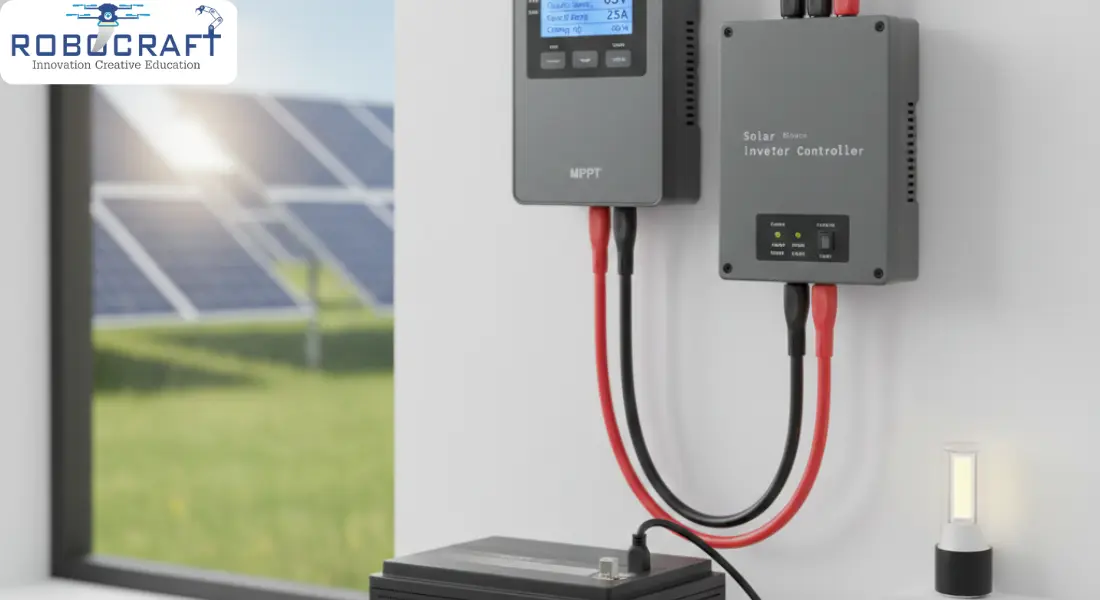
A solar system has two “brains”: the MPPT charge controller, which squeezes the maximum power out of the panels, and the inverter, which turns DC into the AC your appliances use. How these two are chosen and connected decides how much of your sunlight actually becomes usable electricity. This guide explains how they work together and which setup suits homes, shops, farms and solar pumps.
15–30%
More energy vs PWM
12V · 24V · 48V
System voltages
1–7.5 HP
Solar pump controllers
Hybrid
Solar + grid options
How power flows in a solar system
- Solar panels produce DC power that varies with sunlight and temperature.
- MPPT controller tracks the panels’ maximum power point and converts it to the right voltage and current for the battery.
- Battery stores energy for night and power cuts.
- Inverter converts battery or solar DC into 230V AC for appliances.
New to MPPT? Read our MPPT solar charge controller guide first.
Three common MPPT + inverter setups
| Setup | How it works | Best for |
|---|---|---|
| Separate MPPT controller + inverter | Stand-alone MPPT charges the battery; any inverter runs the loads | Adding solar to an existing inverter, DIY and off-grid systems |
| Hybrid inverter (built-in MPPT) | One unit handles solar charging, battery and AC output, often with grid support | New home and shop installations |
| Solar pump controller (MPPT + VFD) | Converts panel DC directly into variable-frequency AC for a pump motor – no battery | Farm irrigation and water supply |
Matching the MPPT controller and inverter
- Battery voltage – controller, battery and inverter must share the same system voltage (12V, 24V or 48V).
- Controller current – size it to panel wattage ÷ battery voltage, plus 20–25% margin.
- Panel voltage – panel string open-circuit voltage must stay below the controller’s maximum PV input on cold mornings.
- Inverter size – continuous rating above your total load, with surge capacity for motors and compressors.
- Battery chemistry – set both controller and inverter to the correct LiFePO4 or lead-acid profile.
Example system
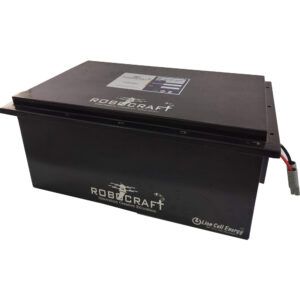
A home with 2 kW of panels and a 48V battery needs an MPPT controller of at least 2000 ÷ 48 ≈ 42A – choose 50–60A. Pair it with a 48V LiFePO4 solar battery and a 2–3 kVA inverter for fans, lights, a fridge and a TV.
Solar pump MPPT and VFD controllers
For irrigation, a solar pump controller combines MPPT with a variable-frequency drive (VFD), so the pump speeds up as sunlight increases and runs without batteries. Hybrid models can also run from the grid when sunlight is weak.
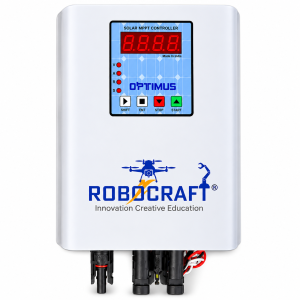
Our solar controllers

Common mistakes to avoid
- Mixing system voltages between controller, battery and inverter.
- Exceeding the controller’s maximum PV input voltage.
- Using thin cables between battery and inverter – see our battery cable guide.
- Leaving charge settings on lead-acid when using a lithium battery.
Frequently asked questions
Do I need a separate MPPT if my inverter is hybrid?
No – a hybrid inverter already has MPPT built in. A separate controller is useful for adding more panels or a second string.
Can I add an MPPT controller to my existing home inverter?
Yes. The MPPT charges the battery from solar, and your existing inverter keeps running the loads.
What is the difference between a solar pump controller and an inverter?
A pump controller drives a motor directly from panels using MPPT and VFD; a home inverter produces fixed 230V AC from a battery.
How much more energy does MPPT give than PWM?
Typically 15–30% more, especially in cool weather or when panel voltage is much higher than battery voltage.
Plan your solar system with Robocraft
Robocraft supplies MPPT charge controllers, solar pump MPPT/VFD controllers and LiFePO4 solar batteries with pan-India delivery. Share your panel wattage, battery voltage or pump HP and we will design the right combination.
