
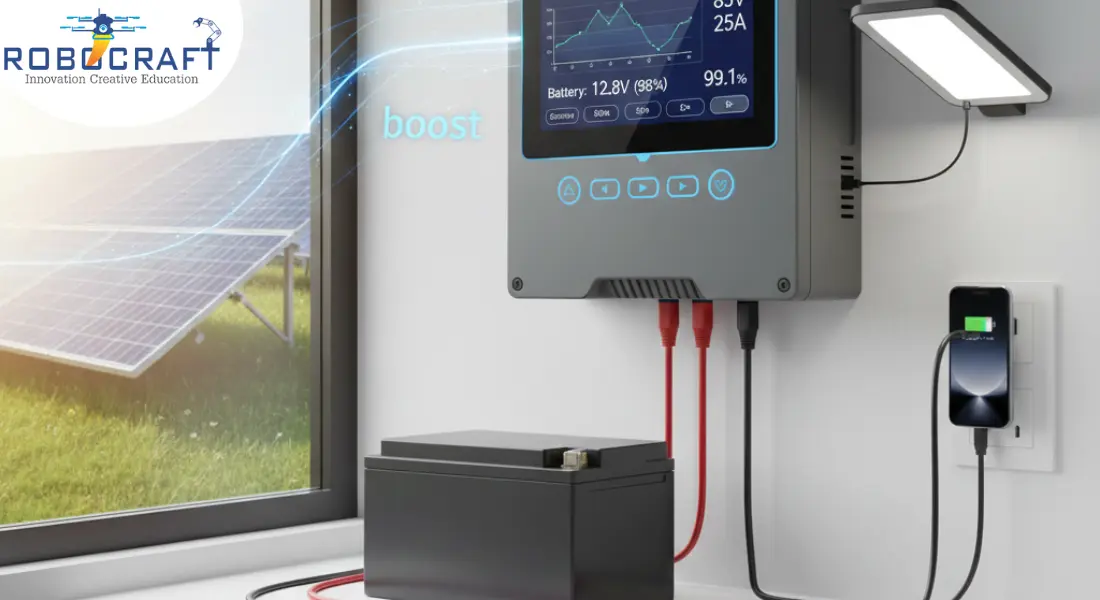
These days, plenty of people choose solar, yet shining light alone won’t guarantee top results. Instead, smooth operation often hinges on clever tech tucked behind the scenes—tech that guides electricity, guards storage units, plus keeps everything running clean. Sitting right in the middle? This Smart MPPT Controller is a sharp unit built to pull every bit of available juice from rooftop arrays without cutting corners on safety or speed.
A closer look at smart controllers reveals their inner workings. Their edge over older types becomes clear when sunlight changes often. Efficiency jumps happen because they adjust on the fly. Performance gains show up most during cloudy spells or low light.
Smart MPPT Controller Basics?
Starts by chasing sunlight’s sweet spot where volts meet amps just right. This Smart Controller watches constantly, adjusting on the fly without waiting. Instead, it learns how batteries like their charge, changing pace as needed through the day. Communication kicks in next, sharing live updates with the system brain across wires. Not magic, just clever timing plus steady eyes on shifting light.
When light shifts or temperatures change, a MPPT controller adapts on its own—so solar panels keep running strong. Instead of sticking to one pace, it fine-tunes power flow based on how much sun hits the cells. Even when demand from devices varies, the system stays balanced without extra help. Because of this constant adjustment, performance doesn’t dip even if weather gets unpredictable.
Smart MPPT Controller Operation
Every time sun rays land on solar panels, power begins moving as DC. Home gadgets need AC instead, so shifting between types becomes necessary. Right at that moment, an intelligent MPPT unit steps in—balancing how much juice goes into storage or onward to conversion. Efficiency hides inside these small shifts, guided quietly by precise electronics.
This is what happens next:
Every few seconds, the system checks how much power comes from the panels while also watching the battery’s charge level closely.
Starting at peak performance, it finds the best voltage and current by tracking where power hits its highest level. Ending with precision, this process locks onto the most efficient operating point without guessing.
Fine-tuned calculations shift energy flow on the fly, boosting performance as conditions change. Power adapts instantly, guided by live feedback instead of fixed rules. Efficiency climbs when adjustments match demand moment by moment.
A built-in inverter helps shift power from DC to AC without hiccups, cutting down wasted energy along the way.
Finding better ways through each stage, a clever MPPT unit pulls out nearly 30 percent extra power when set beside older PWM types. This Smart MPPT ensures your solar panels always operate near their maximum potential.
Smart MPPT Controllers Key Features
Some newer MPPT units include built-in tools that boost performance across solar setups. These upgrades help power flow smoothly under changing conditions. Instead of losing energy during conversion, much more reaches its destination. Because they adapt on their own, results stay strong even when skies shift. Their design allows quick responses to sunlight changes throughout the day. With smarter tracking, panels operate closer to peak output most hours. This kind of tech reduces waste while supporting steady charging patterns.
Check how your panels are doing, keep an eye on battery condition, while watching power use through phone apps or screen readouts. Live updates show up right away, giving clear feedback without delay. See changes moment by moment instead of waiting, using tools that stay active in the background. Information flows steadily, helping spot issues before they grow. Notifications pop up only when needed, leaving you in control. Interface stays clean, focusing just on what matters each day.
Battery care improves when charge speed shifts as the power level changes. Power flows where it’s needed most, so nothing gets too much at once. Devices wake up one by one, keeping the system steady. Some wait while others start, balancing what draws energy. This stopgap keeps wires calm under pressure. Order matters when electricity moves through circuits.
Built-in correction responds when temperatures shift, protecting the battery from stress. Output shifts quietly as surroundings change, keeping performance stable. Heat or cold changes trigger subtle internal tweaks. The system notices warmth or chill, then modifies delivery. Without warning, adjustments happen to avoid harm.
Keeps things safe by stopping too much charge, plus it cuts off if power runs too low. Protection kicks in during a short circuit because that could cause damage otherwise. Reverse polarity gets blocked before trouble starts. Each safeguard works on its own but fits into the whole system quietly.
What helps pull out more power also makes batteries last longer while cutting down on upkeep expenses. This MPPT Controller ensures that every drop of solar energy is used efficiently while protecting the battery bank over time.
Smart MPPT Controller Advantages
Incorporating this MPPT Controller into your solar system offers several significant advantages:
- Most of the sunlight gets turned into power, especially when skies are cloudy. A smart chip inside keeps things running strong no matter how dim it feels outside. Even weak rays still feed usable juice into the system.
- Built-in safeguards stop the battery from charging too much or draining too far. These smarts help it last longer without wearing out fast.
- Less power slips away when things run smoother. Efficiency climbs because less gets lost along the way. Work happens faster without extra drain piling up. Machines do more while pulling fewer resources. Gains add up quietly over time.
- From afar, systems can be watched closely – helping owners or technicians spot problems before they grow. A quiet alert might show something is off, long before it becomes obvious. Watching numbers shift over days gives clues about how well things are running. Early warnings come through without anyone needing to climb on the roof. Small hiccups appear on screens instead of turning into big repairs.
- Sometimes fits different batteries, sometimes works with various inverters – good choice when living without grid power or mixing setups. Built to adapt, not forced into one way. Changes how it connects depending on what’s attached.
A smarter MPPT controller makes sure your solar setup keeps giving back year after year. While it runs quietly behind the scenes, every drop of sunlight gets put to good use. Over time, small gains add up without any extra effort on your part. Because efficiency stays high, you get more out of what you already have. Even as conditions change, performance holds steady through seasons. So long as the sun rises, the system works just as hard. That kind of reliability means fewer worries down the road.
Smart MPPT Controller Compared With Traditional Controllers
Older PWM systems cut down voltage to fit the battery, so lots of power slips away. Instead, an MPPT unit keeps searching for the best output, pulling extra current from identical solar arrays.
Not just simpler to manage, these smart controllers keep batteries healthier through smarter charging patterns. When something goes off track, they can often fix small issues on their own or send alerts before trouble grows. People who run homes or shops and care about steady performance tend to pick the modern MPPT type without thinking twice. Old-style units still work, yet they lack the quiet precision built into today’s versions.
Real-World Applications
From tiny cabins to full homes, this Smart MPPT Controller fits many solar systems. Whether panels line a roof or sit on a trailer, they adapt easily. Power flows better because these units adjust on their own. Even in weak sunlight, performance stays strong. Different voltages? No problem—they handle shifts without fuss. Wherever sun hits panels, these brains make electricity work.
A single rooftop setup adjusts sunlight capture to match household demand. This lessens daily dependence on outside power sources.
When the electricity grid stays out of reach, off-grid solar keeps lights on. Power flows steady even in far corners of the world. Sunlight turns into energy where wires cannot go. These systems work alone, without backup from utilities. Remote cabins, rural clinics, or distant farms stay powered. No connection? No problem. The sun fills the gap each day.
When paired with solar inverters, it handles stored power and runs household appliances without hiccups. A smooth link between sunlight capture and indoor electricity flow keeps things steady. Power drawn earlier gets reused later through smart routing. Storage fills up when sunshine peaks then releases during cloudy spells. This setup adjusts on its own as light changes throughout the day.
Powered by sunlight, these pumps handle tough jobs while keeping batteries safe. When running hard, they still deliver strong performance without draining power sources. Heavy work doesn’t slow them down, thanks to steady energy flow. Built for industry tasks, they balance output and protection naturally. Even under load, battery life stays stable through smart design.
A single change in sunlight shifts how it works. Depending on the moment, voltage adjusts itself. Battery needs shape its response. Weather plays a role too. Stability comes through constant small corrections. Power flows steady because of real-time tracking. Each condition gets weighed before output changes.
