

An axial flux motor – often just called a flux motor or pancake motor – is a compact, flat electric motor that packs a lot of torque into a short length. It is gaining attention in electric motorcycles, performance cars, drones and industrial machines. This guide explains how axial flux motors work, how they compare with conventional radial flux motors, and where they make sense.
Disc shape
Short axial length
High
Torque density
Direct drive
Often no gearbox
PMSM
Typical type
Radial flux vs axial flux
In a conventional radial flux motor, the magnetic field crosses the air gap outward from the shaft, and the rotor spins inside (or outside) a cylindrical stator. In an axial flux motor, the field runs parallel to the shaft, between disc-shaped rotors and stators placed face-to-face. This disc layout gives a larger effective radius for the same length, which means more torque.
| Feature | Radial flux motor | Axial flux motor |
|---|---|---|
| Shape | Long cylinder | Short, flat disc |
| Torque density | Good | Very high |
| Power-to-weight | Good | Excellent |
| Axial length | Longer | Very short – fits in wheels and tight spaces |
| Manufacturing | Mature, lower cost | More complex, higher cost |
| Cooling | Well understood | Needs careful design at high power |
| Typical use | Most EVs, scooters, industry | Performance EVs, motorcycles, aerospace, drones |
Main types of axial flux motor
- Single rotor, single stator – simplest and thinnest.
- Dual rotor, single stator (yokeless) – stator between two magnet discs; very high torque density.
- Single rotor, dual stator – balanced forces, good for higher power.
- Multi-stage – several discs stacked on one shaft for more power.
Advantages
- High torque at low speed – often allows direct drive without a gearbox.
- Compact, short motor that suits in-wheel and space-limited designs.
- High efficiency when well designed with permanent magnets.
- Lower vehicle weight for the same performance.
Limitations
- Higher cost and more complex manufacturing.
- Strong axial forces between discs require rigid construction and good bearings.
- Heat removal from the stator can be challenging at high continuous power.
- Fewer off-the-shelf options and controllers today.
Where axial flux motors are used
- Electric motorcycles and high-performance scooters.
- Performance and hybrid cars.
- Electric aircraft, eVTOL and heavy-lift drones.
- Industrial direct-drive machines and robotics.
Is an axial flux motor right for your EV?
For most scooters, e-bikes and three-wheelers, a proven hub motor or PMSM motor gives the best balance of cost, availability and service. Axial flux makes sense when weight, length and peak torque matter more than cost – such as racing builds and premium motorcycles.
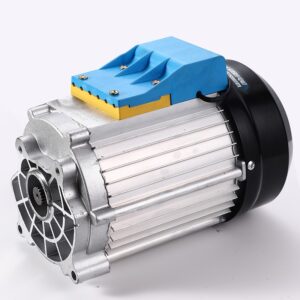
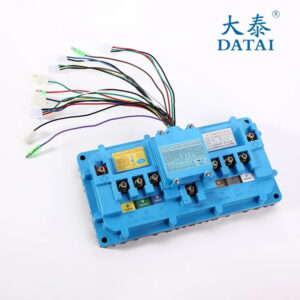
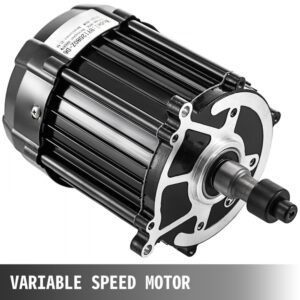
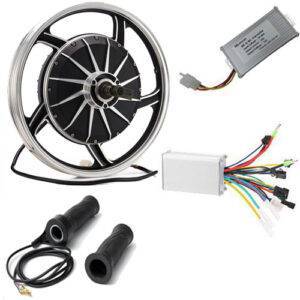
EV motors and controllers we supply
Frequently asked questions
What is a flux motor?
Usually it refers to an axial flux motor – a flat, disc-shaped electric motor where the magnetic flux runs parallel to the shaft.
Is axial flux better than radial flux?
It offers higher torque and power density in a shorter package, but costs more and is harder to cool and manufacture. Radial flux remains the practical choice for most EVs.
Are axial flux motors used in Indian EVs?
Mostly in premium and performance designs and prototypes; mainstream scooters still use hub and PMSM motors.
Do axial flux motors need a special controller?
They are typically permanent magnet synchronous machines and use FOC sine-wave controllers matched to their voltage and current.
Choose the right motor for your build
Robocraft supplies PMSM, BLDC and hub motors, matched controllers and lithium battery packs for EV builders, conversions and projects across India. Tell us your vehicle and performance target and we will suggest the right drive.
